
The Artificial Superintelligence Bill explained
The Private Member's Bill introduced on 8 September 2026 to ban artificial superintelligence in the UK: who introduced it, what it proposes, its parliamentary stage, and why it is not law.
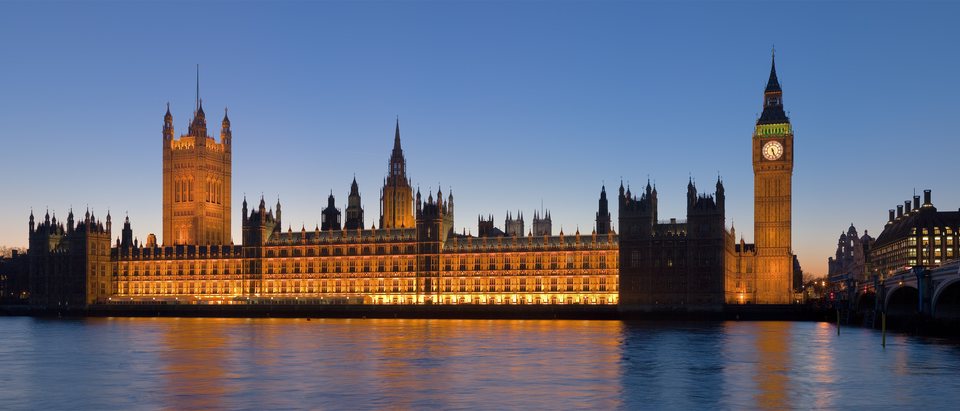
In short: The Artificial Superintelligence Bill is a Private Member’s Bill introduced in the House of Commons on 8 September 2026 by Alex Sobel, the Labour MP for Leeds Central and Headingley. Its stated purpose is to prohibit the development, deployment and operation of artificial superintelligence systems in the UK and to give the government powers to monitor and control them. It is a proposal, not law: it has had a formal first reading only, no text has been published, and its second reading is listed for Friday 13 November 2026. A government spokesperson has said the government does not consider its measures the right approach. Most bills of this kind do not become law.
What the bill is
The bill’s long title, which is all that has been formally laid before Parliament so far, is: “A Bill to make provision to prohibit the development, deployment and operation of artificial superintelligence systems; to establish monitoring and control powers in respect of such systems; and for connected purposes.”
It was introduced under the Ten Minute Rule, a procedure that lets a backbench MP make a short speech in the Commons asking for leave to bring in a bill. The House agreed, the bill was read a first time, and it was ordered to be printed as Bill 142. A first reading is a formality: no debate on the bill’s content takes place and no vote is taken on whether it should become law.
Eleven other MPs from several parties were named in Hansard as presenting the bill with Mr Sobel, among them John McDonnell, Sir Desmond Swayne, Ben Lake and Wera Hobhouse.
| Question | Position as of 2 October 2026 |
|---|---|
| Type of bill | Private Member’s Bill, under the Ten Minute Rule; session 2026–27 |
| Sponsor | Alex Sobel MP (Labour, Leeds Central and Headingley) |
| Stages completed | First reading, House of Commons, 8 September 2026 |
| Next scheduled stage | Second reading, House of Commons, Friday 13 November 2026 (provisional) |
| Bill text | Not yet published (ordered to be printed as Bill 142) |
| Government support | None. A government spokesperson told The Next Web the government does not consider the bill’s measures the right approach |
| Is it law? | No. Nothing in it is in force |
What it proposes
Because no text has been published, the only primary account of what the bill would do is Mr Sobel’s speech on 8 September 2026, recorded in Hansard. In it he set out three elements.
- A prohibition on developing, deploying and operating artificial superintelligence in the UK.
- Monitoring and control powers: he said the bill would “empower the Government to monitor and, where necessary, restrict precursors to superintelligent AI”.
- International action: the government would work with other countries to secure an international agreement prohibiting superintelligence.
He defined artificial superintelligence not by intelligence as such but by its effects on national security: an AI system that can cause “serious damage to the security of the United Kingdom” because of its capabilities to “neutralise, displace, circumvent, subvert or render ineffective relevant human authorities”. That is a narrower and more legal-sounding definition than the research meaning this site uses, which is a system that greatly exceeds the best humans in virtually all domains (explained here). How either definition would be applied in practice, and who would decide what counts as a “precursor”, would depend on a text that does not yet exist.
The speech did not set out penalties, an enforcement body or a licensing regime. The bill’s detail is therefore unknown, and any claim about how it would work in practice should be treated as speculation until a text is printed.
One speaker opposed the motion. Sir Bernard Jenkin, Conservative MP for Harwich and North Essex, argued that “a kind of unilateral disarmament on AI is not going to solve the international problem”. The House then agreed to the motion without a vote.
What it would and would not do
As things stand, it does nothing. A bill that has had a first reading changes no law and creates no duties. Nothing in it applies to any company, researcher or member of the public.
If it became law, it would be the first UK statute aimed specifically at the most capable AI systems, and, by its sponsor’s account, the first bill in any G7 parliament seeking to ban superintelligence. It would sit alongside, not replace, the existing laws that already apply to AI, set out on our page on UK AI regulation.
What it would not do, on the evidence of the speech: it is not a general AI law of the EU kind, with rules for ordinary AI products. It does not address chatbots, deepfakes or data protection. And it would not by itself give the AI Security Institute statutory powers; the Institute remains a non-statutory body that tests models with companies’ voluntary cooperation.
How likely it is to become law
Private Members’ Bills rarely become law without government support, and this one does not have it. The House of Commons Library calculates that across the 2019 Parliament about 6% of Private Members’ Bills starting in the Commons received Royal Assent, and that around 85% went no further than first reading. The Institute for Government counts only five Ten Minute Rule bills passed in the 14 years to 2024.
Second-reading dates for Ten Minute Rule bills are allocated to sitting Fridays, when Private Members’ Bills are debated in order. Bills lower down the list often run out of time and are not debated at all on the listed day. The date of 13 November 2026 is therefore the earliest point at which a debate could happen, not a guarantee that one will.
The government’s position, as reported, is that it does not consider the bill’s measures “the right approach”, while exploring whether “additional targeted interventions” may be needed for the most significant national-security risks from AI. That statement was given to The Next Web by a government spokesperson; it has not been made in Parliament.
Why it matters anyway
Private Members’ Bills often matter less for their chances than for what they signal. Three days after its introduction, on 11 September 2026, more than 70 MPs and peers from several parties signed a letter to the Prime Minister, published by the campaign group ControlAI, asking him to support the bill and to pursue an international ban on superintelligence. It came in the same month as a public debate inside the AI industry about slowing development, and three weeks before a working paper co-written by leading researchers urged governments to prepare for an intelligence explosion.
It also tests a question the UK has so far left open. Successive governments have regulated AI through existing regulators rather than a dedicated law, and the July 2024 King’s Speech promise of legislation for the most powerful models has not been delivered; the May 2026 King’s Speech contained no AI bill. Addressing the UN General Assembly on 22 September 2026, the Prime Minister said the government would act on AI’s risks “including bringing forward new laws if that is what is needed”. The bill offers one answer to what such a law might be. Whether a ban on superintelligence would be workable or wise is contested; the arguments are set out in the risks of superintelligence and whether it can be controlled.
What to watch
- Publication of the bill’s text, which would show its definitions, offences and enforcement.
- Whether the second reading takes place on 13 November 2026, and if so whether the government opposes it.
- Any formal government statement in Parliament, which would carry more weight than the reported response.
This page is reviewed monthly while the bill is before Parliament, and will be updated after 13 November.
Sources
- UK Parliament, “Artificial Superintelligence Bill” and stages, session 2026–27, checked 2 October 2026.
- Hansard, House of Commons, “Artificial Superintelligence”, motion for leave to bring in a bill, 8 September 2026.
- The Next Web, report on the cross-party letter and the government response, 15 September 2026.
- TIME, report on the bill’s introduction, 8 September 2026: the sponsor’s “first bill … in any G7 parliament” description.
- ControlAI, letter to the Prime Minister, dated 11 September 2026.
- House of Commons Library, “Private Members’ Bills”, CBP-7554.
- Institute for Government, “Private members’ bills”, explainer.
- King’s Speech background briefing notes, 17 July 2024 and 13 May 2026.
- Prime Minister’s Office, “PM speech at UNGA: 22 September 2026”, published 23 September 2026.
Common questions
- Has the UK banned superintelligence?
- No. The Artificial Superintelligence Bill is a Private Member's Bill that has had a formal first reading only. It has not been debated, no text has been published, and nothing in it is in force.
- Who introduced the Artificial Superintelligence Bill?
- Alex Sobel, the Labour MP for Leeds Central and Headingley, under the Ten Minute Rule on 8 September 2026, with eleven other MPs from several parties named as presenting it with him.
- When is the second reading?
- It is listed for Friday 13 November 2026 in the House of Commons. Private Members' Bills are debated in order on sitting Fridays, and those lower down the list often run out of time, so the debate may not take place that day.